

The story
A small food system designed to teach as it produces.
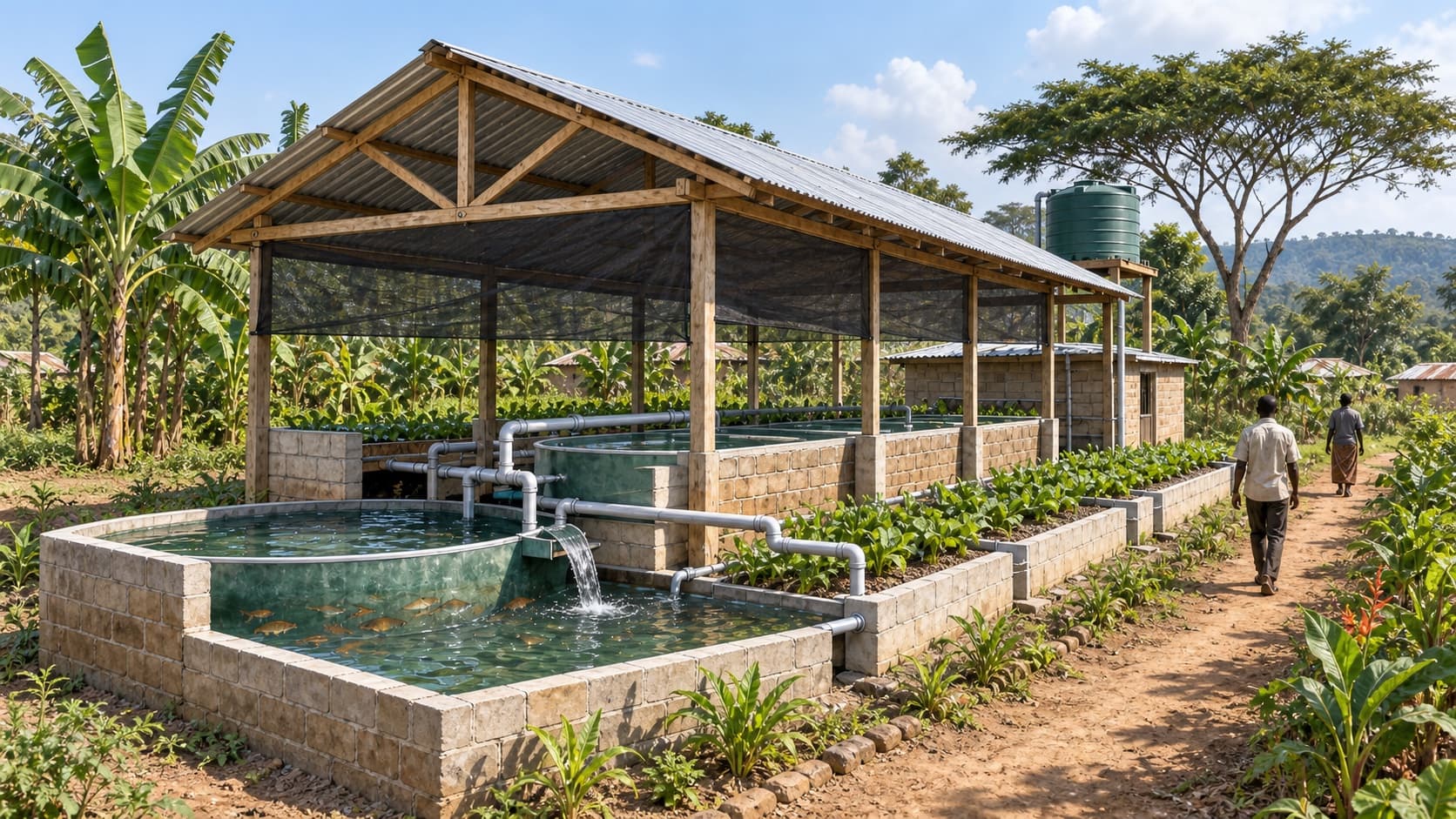
Africa Malaika Aquaponics began with a practical question: could a compact, water-conscious growing system help communities produce vegetables and fish while building local technical knowledge? The project developed small-scale aquaponics concepts for village use in Tanzania, linking fish tanks and plant beds so nutrients and water circulate through one productive system. That closed-loop logic reduces dependence on large plots and conventional irrigation while making every component visible enough to become a teaching tool.
Rather than proposing a single monumental facility, the work focused on a replicable piece of community infrastructure that could support food production, training, and experimentation at an approachable scale. Water, food, maintenance, and education are treated as one connected design problem, with resilience coming from skills that can be shared and a system that can be understood locally.