The story
Flood management and resource reuse in a Bangkok home
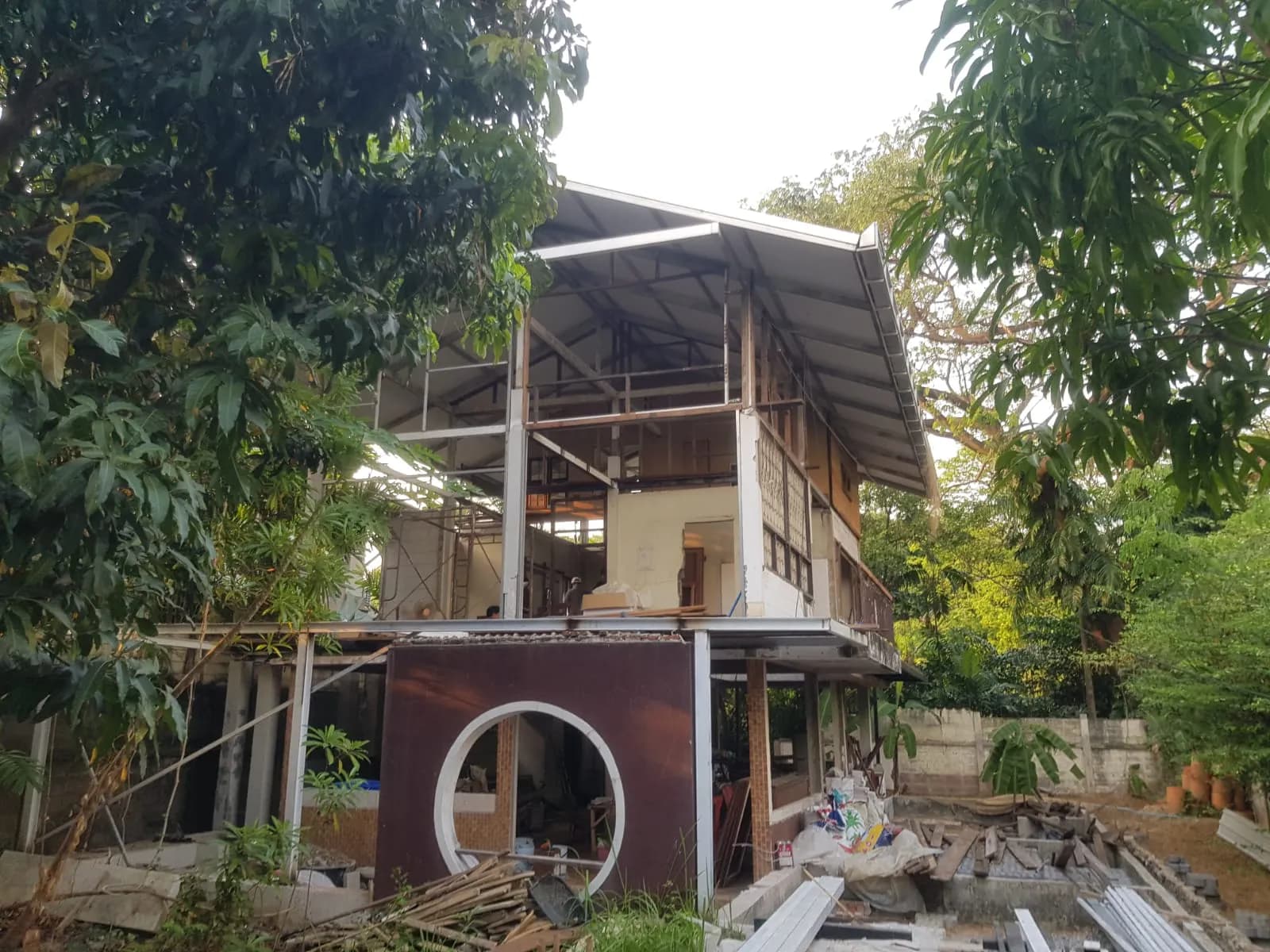
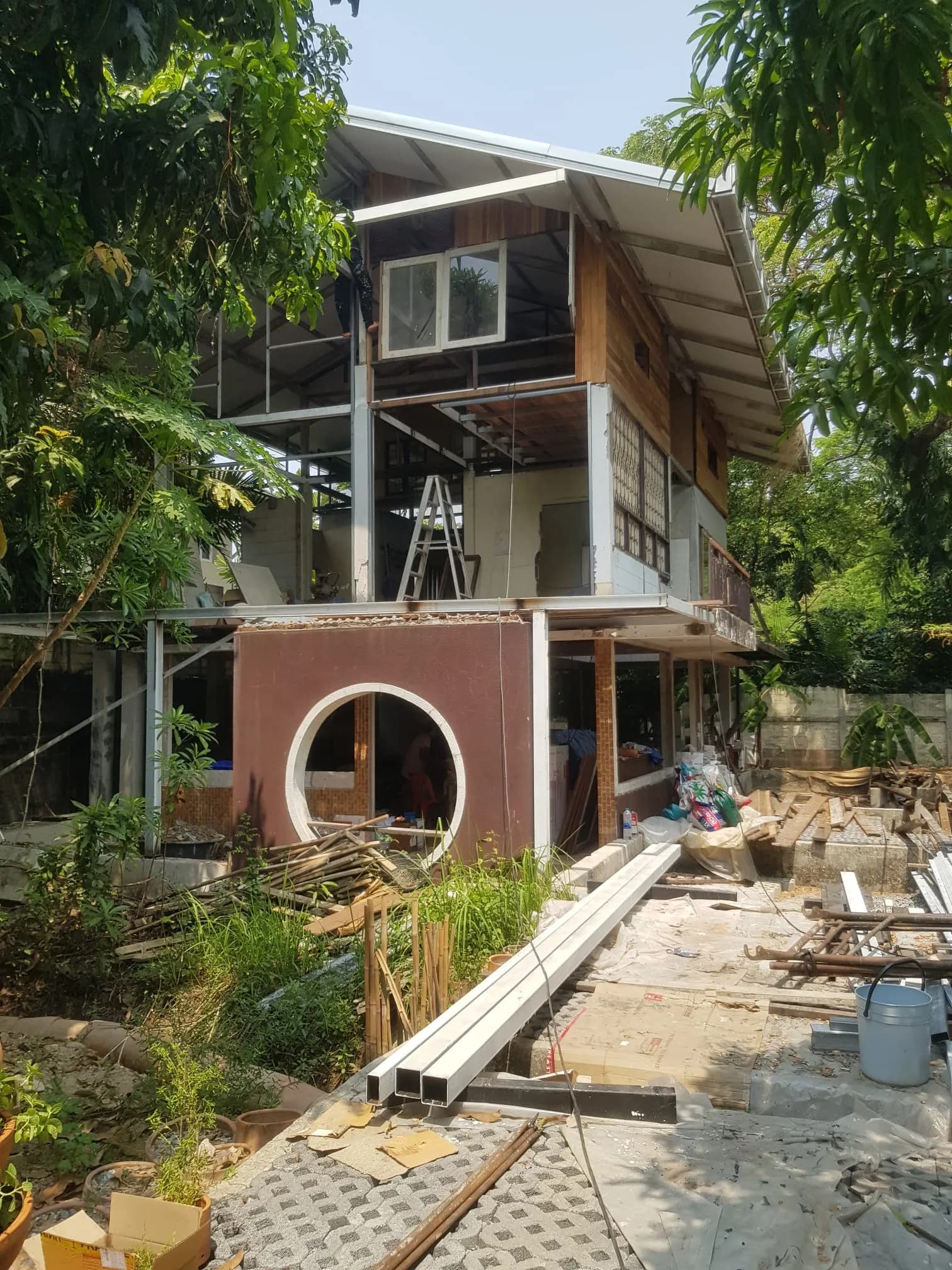
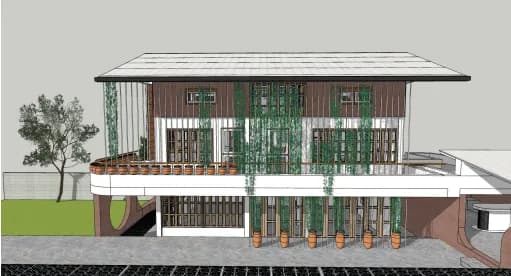
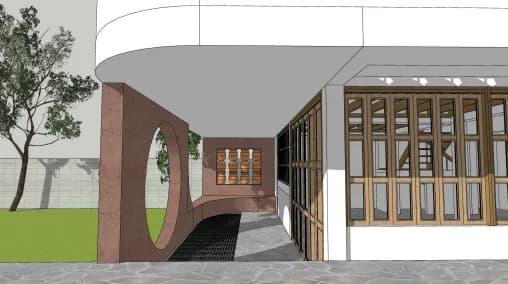
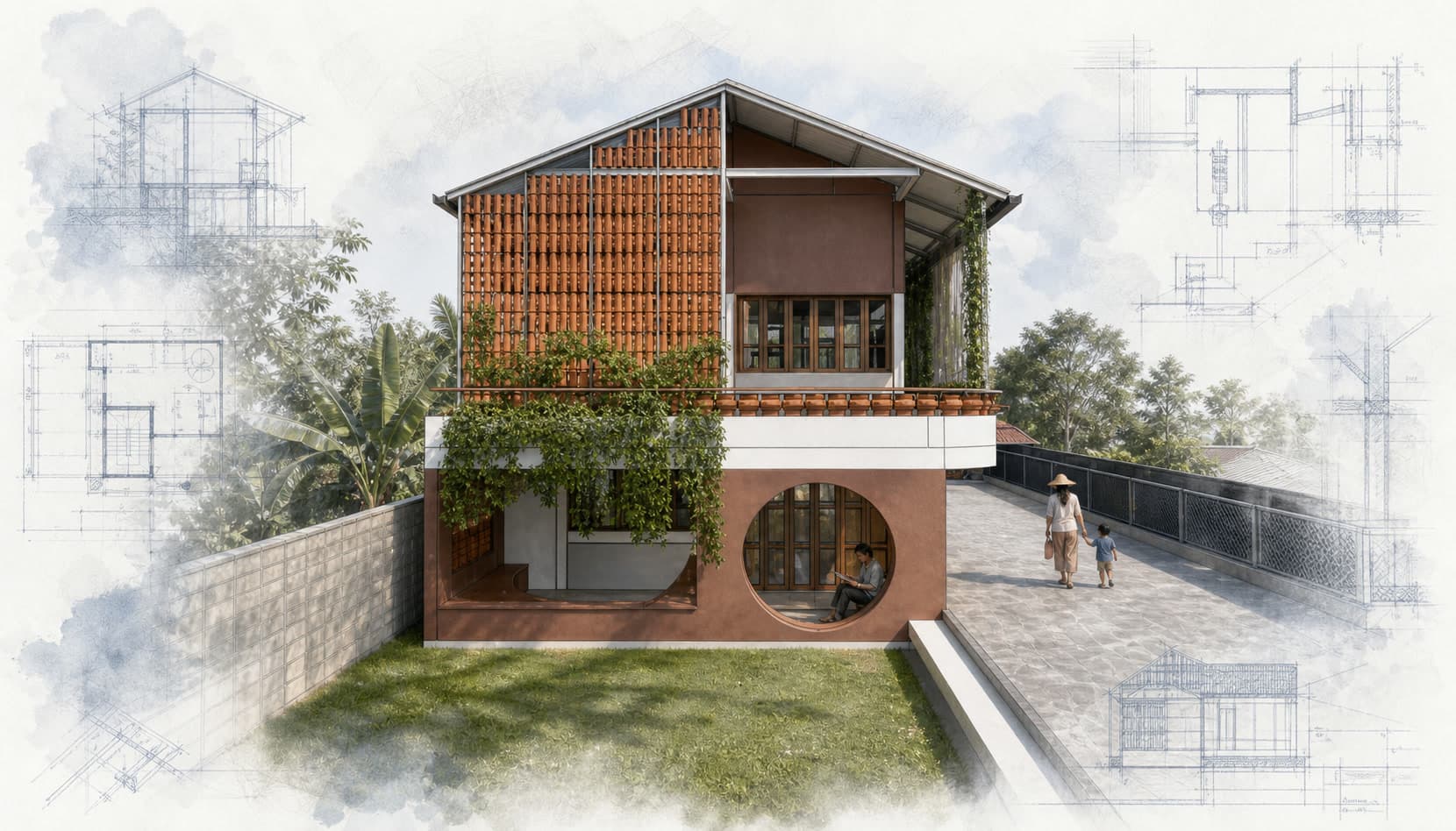
Baan Tam-na begins with an ordinary and difficult urban condition: a 50-year-old Bangkok house sitting below the road and repeatedly exposed to flooding. Its owners imagined the renovation as both a workplace for environmental practitioners and a public case study in lower-waste city living. Existing materials were sorted for reuse, resale, or recycling, while proposed systems included flood management, water storage and natural treatment, composting, a biogas toilet, clay-based cooling, greywater reed beds, vertical growing, and solar power. The goal was a place where people could work, stay, exchange separated waste, and see circular systems operating at household scale.
The project also faced real challenges: conventional contractors struggled with the experimental brief, and portions of the work were paused. Journeyman International’s involvement supported a design process willing to learn from those constraints. Baan Tam-na remains an ongoing renovation and demonstration project for urban sustainability.